Technology is not a luxury; it is essential to equity.
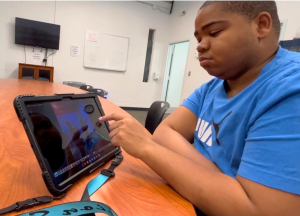
SEEC takes a personalized approach to assistive technology, which we call Person-Driven Technology (PDT). The goal is to help people take more control over their lives through the thoughtful and strategic use of technology.
We work alongside each person to ensure that technology not only meets immediate needs but also supports long-term self-sufficiency. Technology can serve as a powerful tool to bridge gaps in various aspects of a person’s daily life, from assisting with home activities like cooking and cleaning, to enhancing mobility and navigation within their community, and even promoting independence in the workplace.
At SEEC, technology is a vehicle to reject ableism and center choice, autonomy, and dignity for the people we support.
Will you help unlock independence and equity today?
What your gift funds:
- Take-home assistive technology tools
- SEEC’s assistive technology library with tools that can be borrowed, tested and returned to help people we support make informed decisions about what to purchase.
- Creation of Maker Space at SEEC: a hands-on hub to try, customize, and train with assistive technology.
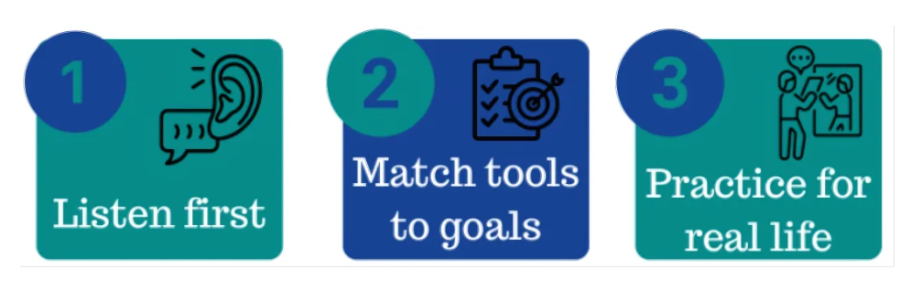
A Snapshot of Our Process:
This is not about fitting people to technology. It is about creating an inviting process led by the people we support and finding the right mix of high- and low-tech so they can build their own resources to communicate, be independent and included.
Examples of Assistive Technology
Low-Tech
Definition: Simple, often inexpensive tools that don’t require electricity, batteries, or advanced training.
Key Features: Easy to use, minimal setup, affordable, widely available
Go Talk: The Go Talk is a portable, low tech, augmentative and alternative communication (AAC) device. It is a voice-output device that supports people with daily activities such as requesting items, asking questions, making choices, and initiating conversations.
Mid-Tech
Definition: Devices that require some electricity or batteries but are less complex than computers or advanced software.
Key Features: More interactive, may need basic training, usually moderately priced.
C-Pen: The C-Pen is a portable, mid-high, optical character recognition (OCR) pen. It scans printed text, reads text aloud and offers a built-in dictionary for definitions. Users can also store scanned text and audio, voice record and transfer files through USB.
High-Tech
Definition: Complex, often computer-based tools that use advanced electronics, software, or specialized systems.
Key Features: More powerful and versatile, often expensive, require training and technical support.
BoundaryCare: BoundaryCare is a high-tech assistive technology platform. It uses an Apple Watch to provide real-time health monitoring (including fall and seizure detection, heart rate), GPS tracking with geofencing, medication reminders, and an outreach/assistance button.